It’s been five years since Scotland’s first large-scale water pump went live and the heat network has expanded to connect residential buildings. We sat down with Jack Devlin, Housing Services Manager for Clydebank Housing Association to find out if it’s lowered bills, improved health outcomes and made their properties more desirable.
Vital Energi: Can you tell us about the properties connected to the new heat network?
Jack Devlin: Clydebank Housing has two separate developments. We have new build flats across Queens Quay, which are part of a larger development, and 45 homes at Dumbarton Road Flats, which are pre-1919 sandstone tenement buildings.
Vital Energi: What was the customer experience in these older properties?
Jack Devlin: The old electric storage heaters weren’t efficient, which showed in the energy bills. They also didn’t have great levels of control, which meant even when they were on, they didn’t heat the homes as effectively as they could. We got feedback that many residents had turned their heating system off completely and were using convector heaters.
We did a survey asking residents what their heating bills were and the average range came back between £250-350 per month, with the highest being £425. We had one tenant who left one of these properties, citing the heating costs as the reason.
In some cases, people weren’t using their heating at all, which obviously has implications for the property, such as mould and damp, but more importantly, it has implications for their health. We made it a priority to address this and find a solution to lower bills and improve control at Dumbarton Road Flats.
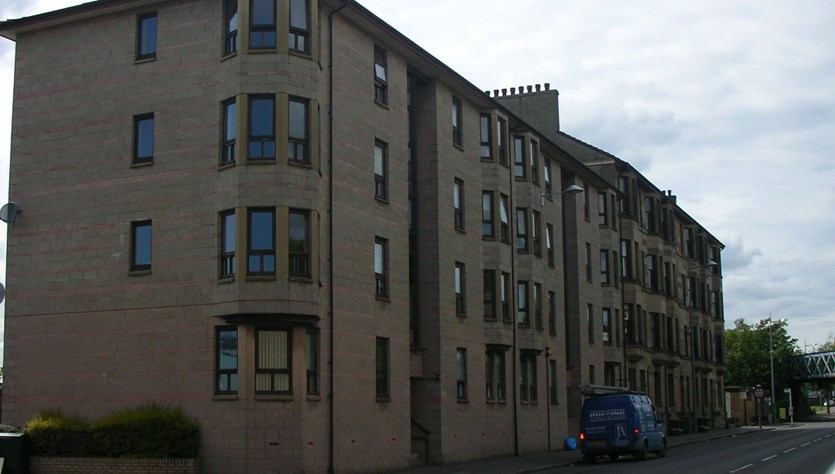
One expansion on the Queens Quay heat network saw us connection 45 homes at Dumbarton Road Flats, which are pre-1919 sandstone tenement buildings.
Vital Energi: Was district heating always the plan?
Jack Devlin: No, we were committed to finding the best solution, so we looked at a range of technologies, including gas. West Dunbartonshire Council made us aware of the plans for the Queens Quay heat network and Vital Energi helped us understand the financial side of it and how it would affect heating bills.
It looked like the best solution, but then we had to find funding for the connections and the in-home modifications.
Vital Energi: Where did the funding come from?
Jack Devlin: We used a couple of sources. We applied to the Scottish Government’s Social Housing Net Zero Heat Fund and a Charities Aid Foundation (CAF) Bank Green Loan for the rest.
Vital Energi supported us through this phase with technical understanding, but also the financial modelling so we could demonstrate the benefits to the environment and to the residents. One issue was that the application process took so long that inflation pushed up the price of some elements, so we had to revisit the budget a couple of times, but we were successful in gaining the funding.
Vital Energi: Once the project started, how much disruption was there?
Surprisingly little. The new build flats have the risers on the outside, so there’s very little disruption to the internal building. The retrofit flats at Dumbarton Road involved being in the building to modify pipework, but again, it was relatively straight forwards.
I think the biggest impact was probably that scaffolding, which was up for a couple of months.
We needed to do modifications to the residents’ flats, installing the Heat Interface Units and the controls, but again, that went smoothly. We educated the residents about what would happen and arranged access for Vital Energi’s engineers, and they’d refined the installation method so they could do an entire flat in a single day, with a quick follow up visit to take care of any small cosmetic issues.
Most residents were looking forwards to the new system, so they were very helpful.
Vital Energi: It’s been live for several years now. What’s the feedback about financial savings?
Jack Devlin: As I said, the average bills were between £250 to £350 and with the new system and controls we’re experiencing a reduction of between 70-80%, which will make a real difference in the lives of the residents.
Additionally, that bill covers operation and maintenance cost. The housing association was able to absorb the service charge, which delivers further savings for our residents
It’s not purely financial, however. Heating is being used more, reducing the possibility of damp and mold and keeping people’s homes warm and comfortable, so the positive health and mental health implications are very important to us.
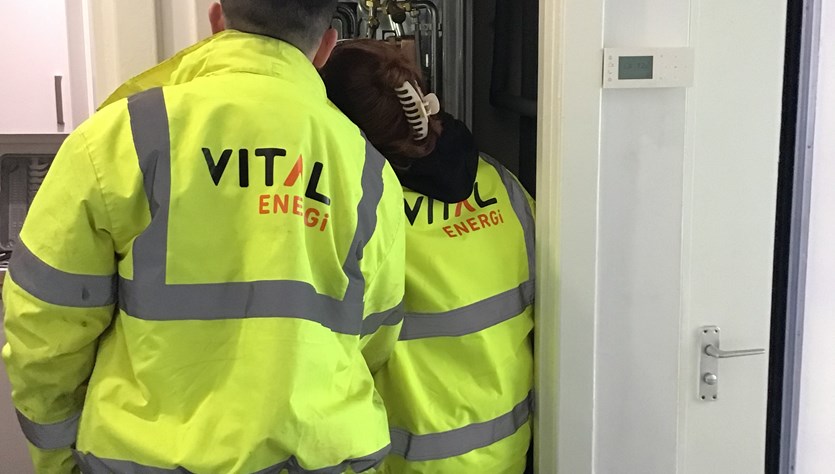
In-home works could be done in a single day, with a quick revisit to resolve any cosmetic issues.
Vital Energi: We’ve talked about the benefits to the residents. Has Clydebank Housing Association seen any improvements?
Jack Devlin: Absolutely, we’re seeing significant improvements in many areas. With the old heating system, the properties weren’t as desirable, and we would have resident turnover and occasional voids. With the new system, far fewer people are moving out and when they do it’s for positive reasons, such as needing a bigger house when they start a family or moving for a job, which is a positive sign. There’s been a drop of 33% in voids since implementing the new system which is really positive.
With lower bills, residents aren’t struggling to pay as much as they did, so rental arrears are down, which again, is a positive thing for us. I’ve also seen improvements in anti-social behaviour, which I think may be linked to reduced stress and improved mental health.
The focus of this was always to improve the resident experience, but it’s definitely helped the homes become more desirable, retained residents and improved revenue as a side effect.
Vital Energi: You mentioned residents didn’t understand how to get the best out of their old system. Did you do anything to educate them on their new systems?
Jack Devlin: We put a lot of effort into this as we want residents to get the best out of the system, so they’ll save the most money. Residents have access to regular newsletters and articles and could attend informal pre-start drop ins. Vital Energi also have a phone line and email address people can contact.
We also give them basic advice on how to reduce bills, showing how much they can save by turning their thermostat down by one degree. These tip and information help to bring their bills down a little bit more.
Alongside this, they can access the Glass metering and billing platform, which lets them see their usage and energy spend. Going forwards we’re setting up accounts prior to tenants moving in so they’re familiar with it from day one.
Vital Energi: If you’ve experienced benefits for both the resident and the housing association, are you looking to expand heat network connections?
Jack Devlin: We are. It’s a proven way to combat fuel poverty, improve health outcomes and it strengthens the desirability of our housing stock, so we’d love to expand the benefits.
We’re currently engaging with West Dunbartonshire Council and new developers and, again, we’d like to prioritise the residents with the most inefficient heating systems. There’s a big opportunity to reduce fuel poverty and the network was designed to expand meaning there’s capacity for a lot more connections.
We’ve seen the benefits the heat network has brought so we’re actively pursuing funding now.
