Decarbonising the built environment is not optional. It is essential. Around 40 percent of UK emissions come from the built environment, with roughly a quarter of that linked to embodied carbon from materials, manufacturing, transport and construction. Yet while operational carbon is now well understood, embodied carbon in energy infrastructure remains largely uncharted.
That is why our whole life carbon assessment work at Lancaster University matters.
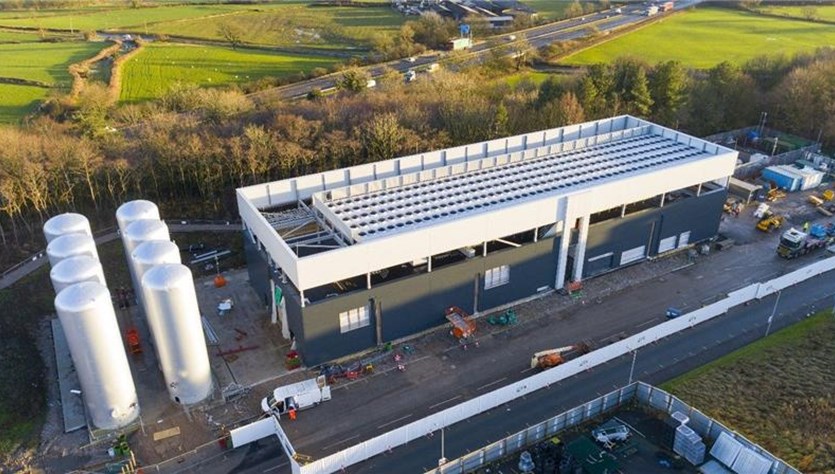
Lancaster’s Net Zero Energy Project combines an 11.5MW solar farm, a 7MW heat pump energy centre and 6.5km of new district heating pipework. It is a sector leading example of infrastructure designed explicitly to remove reliance on fossil fuels. Together with Lancaster University, we applied the RICS Whole Life Carbon Assessment methodology not as a box-ticking exercise, but as a way to test whether existing carbon frameworks are truly fit for purpose when applied to renewable energy infrastructure.
The findings, published in the paper Applying Whole Life Carbon Assessment to Renewable Energy Infrastructure: Lessons from Lancaster University’s Net Zero Energy Project, highlight a fundamental challenge. Infrastructure built to deliver near-term decarbonisation benefits is not the same as a building, a road or a railway. Applying a 120-year reference study period to assets likely to be superseded by better technology long before that point risks obscuring their real carbon value. One of the key outcomes of this work is a clear case for the industry to refine how whole life carbon guidance is applied to low carbon energy projects.
What truly distinguishes this assessment is how it was carried out. Rather than relying on high-level design assumptions, we used real, live activity data collected directly from site. Our site teams, subcontractors and partners, alongside Lancaster University interns, enabled an unprecedented level of data granularity across the solar farm, energy centre and district heating works. This makes the assessment not just robust, but genuinely reflective of what happens on site.
This approach has implications far beyond a single project. There are currently no established industry benchmarks for embodied carbon in heat networks and energy infrastructure outside of major road and rail projects. By building a growing evidence base across live schemes, including Lancaster, Leeds PIPES and new trial sites such as Easter Bush, Energy on Clyde and Walsall, we are developing the data needed to set meaningful benchmarks, identify carbon hotspots and drive real reductions.
Just as importantly, this work is done entirely in house. That allows us to integrate carbon assessment with delivery, giving clients greater confidence in our ability not only to measure emissions accurately, but to actively reduce both our Scope 1 emissions and their Scope 3 impacts.
As embodied carbon expectations increase across tenders, policy and frameworks such as the Green Heat Network Fund and UK Net Zero Building Standard, this capability is becoming critical. Our next focus is working more closely with suppliers to improve environmental product data and deepen understanding across the value chain.
For us, whole life carbon is not an academic exercise. It is a practical tool for accelerating decarbonisation, improving how infrastructure is delivered, and ensuring low carbon energy systems deliver their full climate benefit. On Earth Day, and every day, that is the standard we are working towards.