Nottingham City Hospital was the last hospital in the UK still burning coal. Today, that’s history. Our two-phase, £34.8m programme has replaced ageing coal and gas boilers with a modern, low-carbon energy centre - delivered without a single disruption to patient care, across a live, acute hospital site. It’s a model for what’s possible across the wider NHS estate, and proof that even the most complex healthcare sites can make the switch to clean energy.


Our relationship with Nottingham University Hospitals NHS Trust goes back to 2017. Even then, the Trust had big ambitions. It had originally explored hydrogen as an option, and although that wasn’t yet commercially viable, the approach showed how seriously it was thinking about the future. When it went to procurement, it was looking for a long-term energy partner who could guarantee savings on both cost and carbon, and deliver at least 5% of on-site generation from green sources - an ambitious target that pushed the boundaries of what was achievable at the time.
Before construction began in 2021, the project navigated changes to NHS funding rules and several rounds of grant development. Rather than step back, we worked through each challenge as a proactive partner, and the programme was ultimately delivered through the Government’s Public Sector Decarbonisation Scheme (PSDS), administered by Salix Finance.
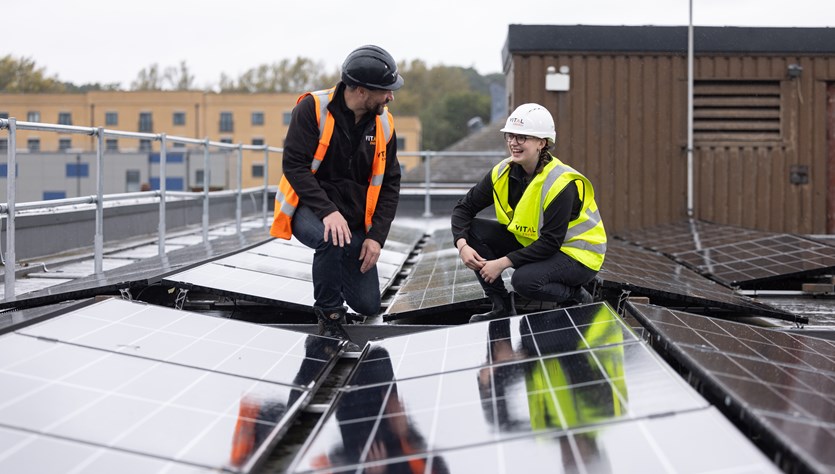
Phase one replaced the coal and gas boiler infrastructure with a new energy centre, air source heat pumps, solar PV panels, and an LED lighting upgrade across more than 6,600 fittings. Phase two added further low-carbon heating, waste heat recovery, insulation upgrades, and a sitewide Building Management System (BMS) upgrade, delivered as a variation to our existing Energy Performance Contract (EPC) with the Trust.
The Trust’s goals were clear: eliminate coal dependency, cut carbon emissions, improve energy resilience, and do it all without disrupting patient care. That meant carefully sequencing the hospital’s move from coal, to an interim gas supply, to the new energy centre - making sure heating and hot water were never lost along the way.
Much of this work happened through the COVID-19 pandemic, which meant working flexibly from the start. Early on, we delivered an interim gas connection to keep the Trust moving before the full solution was ready, and we pre-installed isolation valves ahead of the main contract to make later works easier and faster.
We also supported the Trust through community engagement, including workshops with local residents and environmental groups, helping explain how the programme would improve air quality and reduce emissions for the surrounding area.
